
The main types of garden mulch are organic mulches (bark, wood chip, tea tree, sugar cane and lucerne), inorganic mulches (pebbles, gravel and stone) and living mulches (ground covers). Below we compare the mulches we stock, explain how to choose between them and cover how deep to lay mulch, how much you need and how it’s delivered.
Types of organic mulch
There’s a wide variety of garden mulch to suit different preferences and gardening needs. We stock several main types of organic mulch. Most are sold by the cubic metre, and many also come in bags or bulka bags. The comparison table lists the whole range.
Hoop bark
Hoop bark and mulches come from the production of hoop pine for the construction industry: the bark is peeled from the tree before it is milled, and ours is sourced from Sunshine Coast hoop pine plantations. Hoop Bark Medium is dark-coloured bark strips about 25 mm (one inch) wide. The flat strip shape grips on slopes and embankments, so it’s the go-to choice for steep garden beds where other mulches slide or wash away. It holds its colour well, breaks down slowly compared with finer mulches, and has been our most popular bark for many years.
Hoop Fines is a finer grade of hoop bark. It’s finely screened, with a strong dark colour and a pleasant natural fragrance, and suits densely planted beds, shrubs and general landscape mulching.

Pine bark
Pine bark is a by-product of milling pine plantation timber. At the mill, large grinders and sieving trommels grade the bark into different sizes, and we stock several:
- Pine Nugget Bark: golden nuggets about 15–25 mm, with a soft texture and warm colour. It suits garden beds, pots, courtyards and indoor plantings, and breaks down slowly compared with finer mulches.
- Chunky Pine Nuggets: nuggets about 50 mm, in rich red and tan tones, for feature gardens and commercial landscapes. They’re slow to break down, and the heavier nuggets are less likely to shift in windy spots or on slopes.
- Soft Fall Pine Bark: finely screened and vacuum-cleaned so all fines and dust are removed. It’s compliant for playgrounds and soft-fall areas, and it also makes a clean, premium mulch for small gardens, heavily planted areas, pots and indoor settings.
- Takura Soft Fall: a manufactured pine wood product designed for school playgrounds and under play equipment. The product page says a current compliance certificate is supplied.
- Rocky Point Pine Bark: a 50L bag of long-lasting, economical pine bark mulch.


Cypress bark and mulch
Cypress mulches have gained popularity for their pleasant fragrance. They come in several looks:
- Red Cypress Mulch: a fibrous mulch with a deep, natural rusty-red colour and no dyes.
- Blended Cypress Fines: fines and small chip from the cypress pine tree, with a neat, compact finish.
- Cypress Woodchip: clean golden chips of consistent size and shape.
- Tropical Cypress Blend: a mix of cypress bark and small matchstick-sized woodchip, and one of the more economical products in the cypress range.
- Ochre Red Mulch and Midnight Black Mulch: dyed cypress timber mulches with a coarse, chunky texture, in a rich red and a deep black. The colour is worked in during processing, and the product pages say the coarse texture gives them a longer life than standard dyed woodchip.
- Rocky Point Cypress Mulch and Rocky Point Red Cypress Mulch come in 50L bags.
Dyed mulch can bleed colour when it’s fresh, especially on light concrete, tiles or pavers, so have it tipped onto grass, dirt or a tarp rather than straight onto paving.
Our product pages describe cypress as “reported” to deter termites and white ants (they’re the same insect). Treat that as a reported trait, not protection for your home. No mulch will protect a house, so keep every mulch back from walls (see the cautions below).


Tree harvested mulches (recycled green waste)
These mulches are recycled from green waste and cleared land, such as trees removed for housing, train lines and roads. Recycling felled trees into mulch is an eco-friendly approach. Our selection includes:
- Green Harvest: double tub-ground to a fine, dark, uniform finish. It’s one of our most successful products and has been used by architects and landscapers across many Brisbane parklands and public spaces. The dark colour gives plantings a clean backdrop.
- Aged Chippers Mulch: lightly aged green waste chippers, from fine material through to chunky woodchip. The blend varies between batches in colour, texture and timber species. It’s a practical, budget-friendly choice for large areas, new developments, slope stabilisation and commercial sites where coverage matters more than appearance.
Both are recycled green waste products and may contain foreign matter. We offer no guarantees on what’s in them, so we recommend viewing the product in person before you order.


Tea tree mulch
Tea Tree Mulch is naturally dark and extremely fragrant. The natural tea tree oils give off a refreshing perfume, the dark colour makes an attractive finish in garden beds, and the organic material breaks down slowly to improve soil health over time. It’s a popular choice for both native and ornamental gardens, and the fragrance is strongest on a fresh installation. Rocky Point’s 50L bag of tea tree mulch is made as a by-product of the tea tree oil process and is certified organic.

Sugar cane and lucerne mulch
These mulches are packed in bales, and both are certified organic Rocky Point products. They break down faster than bark and wood chip, which suits some jobs, and their look may not suit every garden. They work very well in vegetable patches, and their main benefit is that they eventually become compost, which is good for the topsoil.
- Sugar Cane Mulch is made from dried cane leaves, tops and offcuts. It’s dust-extracted, contains no weeds or seeds, and breaks down quickly to enrich the soil with organic matter and replenish nitrogen.
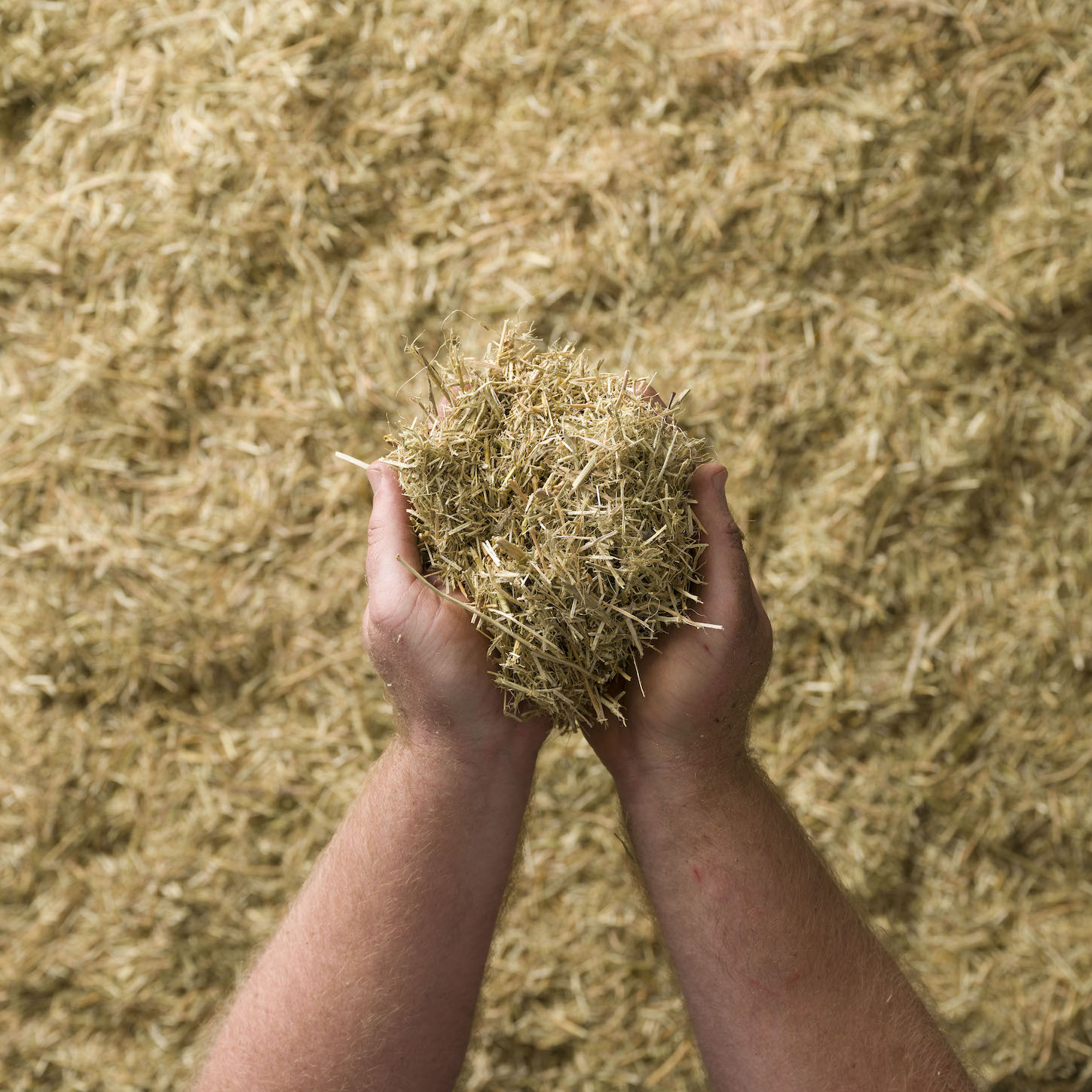
- Lucerne Mulch is a nitrogen-rich hay (also called lucerne hay). As it decomposes it adds nitrogen and potassium to the soil, so it suits veggie patches, new plantings and beds that need a nutrient boost.

What is garden mulch and why does it matter?
Garden mulch is a layer of material spread over the soil to protect it. It copies the leaf and twig litter on a forest or bush floor, which shelters the soil and slowly rots into natural compost. A suburban garden can’t build up that leaf litter on its own, so mulch is the substitute.

Mulch does much more than tidy a bed. It:
- reduces moisture loss from the topsoil, so you water less
- suppresses weeds
- keeps the soil cooler in summer
- supports the microbial activity that keeps topsoil healthy
- reduces erosion, so heavy rain doesn’t wash the topsoil away
- makes the garden look better, with a choice of colours and textures
It’s one of the simplest ways to cut your watering, which is why it features in our guide to a sustainable garden.
The three kinds of mulch
Organic mulch is the most commonly used and is closest to natural forest mulch. It covers everything above, from bark to lucerne, and it’s available in our bark & mulch range, in bags, bulka bags and bulk quantities.
Inorganic mulch is rock, stone and other material that doesn’t break down easily. Our decorative stone range includes Tumbled Sandstone 20mm, with gold, pink and cream swirls, and Cascade Pebble 30–65mm, a washed and screened river-worn pebble, both sold by the tonne. Stone is commonly used in “dry” gardening because it suits those plants (ask your local nursery about your own). It doesn’t decay, so although the upfront cost can be higher depending on the stone, it can last indefinitely. You’ll still need to top it up occasionally, just less often than organic mulch. A weed mat that lets water through goes underneath.

Living mulch means ground covers. They protect the topsoil from weather, reduce moisture loss, prevent erosion, inhibit weeds and safeguard microbial activity. They are also plants, so they compete with their neighbours for water. Our guide to ground cover plants is a good place to start, and your local nursery can advise on what suits your garden.
Choosing the best mulch for your garden
The best mulch depends on what you’re growing, the look you want and how often you want to top it up. As a rule of thumb, the coarser the mulch, the slower it breaks down and the less often you’ll replace it. Finer mulches break down faster and return organic matter to the soil sooner.
This table covers the mulches in our range. The last column is the depth each product page gives for weed suppression (for the Rocky Point cypress bags, the depth their coverage is based on). Check the product page for current price and stock.
| Mulch | Sold as | What the product page says | Depth on the page |
|---|---|---|---|
| Hoop Bark Medium | Cubic metre; bulka bag | Dark bark strips about 25 mm wide from Sunshine Coast hoop pine. Grips on slopes and embankments. | 50–75 mm |
| Hoop Fines Mulch | Cubic metre | Finely screened hoop pine mulch with a strong dark colour and natural fragrance. | 50–75 mm |
| Pine Nugget Bark | Cubic metre; 40L bag; bulka bag | Golden pine bark nuggets about 15–25 mm, with a soft texture. Suits beds, pots, courtyards and indoor use. | 50–75 mm |
| Chunky Pine Nuggets | Cubic metre | Pine bark nuggets about 50 mm in red and tan tones. Slow to break down. | 100–150 mm |
| Soft Fall Pine Bark | Cubic metre; bag; bulka bag | Finely screened, dust-free nuggets. Compliant for playgrounds, and also a clean mulch for small gardens and pots. | 50–75 mm |
| Takura Soft Fall | Cubic metre; bulka bag | Manufactured pine wood soft-fall mulch for playgrounds and play equipment. | Not stated |
| Red Cypress Mulch | Cubic metre; 40L bag; bulka bag | Fibrous cypress mulch in a natural rusty-red colour, with no dyes. | 50–75 mm |
| Blended Cypress Fines | Cubic metre; 40L bag; bulka bag | Fines and small chip from the cypress pine tree, with a neat, compact finish. | 50–75 mm |
| Cypress Woodchip | Cubic metre; 40L bag; bulka bag | Clean golden chips of consistent size and shape, with a natural cypress fragrance. | 50–75 mm |
| Tropical Cypress Blend | Cubic metre; 40L bag; bulka bag | Cypress bark with small matchstick-sized woodchip. One of the more economical cypress products. | 50–75 mm |
| Ochre Red Mulch | Cubic metre; 40L bag | Dyed cypress timber mulch with a coarse, chunky texture and rich red colour. Colour may bleed when fresh. | Not stated |
| Midnight Black Mulch | Cubic metre; 40L bag | Dyed cypress timber mulch with a coarse, chunky texture and deep black colour. Colour may bleed when fresh. | Not stated |
| Green Harvest | Cubic metre; 40L bag; bulka bag | Recycled green waste, double tub-ground to a fine, dark, uniform finish. May contain foreign matter. | 50–75 mm |
| Aged Chippers Mulch | Cubic metre; 40L bag | Lightly aged green waste chippers, from fine material to chunky woodchip. Varies between batches. May contain foreign matter. | 50–75 mm |
| Tea Tree Mulch | Cubic metre; 40L bag; bulka bag | Naturally dark, extremely fragrant mulch for native and ornamental gardens. | 50–75 mm |
| Rocky Point 50L bags: Tea Tree, Pine Bark, Cypress, Red Cypress | 50L bag | Tea tree is certified organic. Pine bark is long-lasting. Both cypress bags state their coverage. | Cypress bags: 25 mm (re-mulching) or 50 mm (new mulch) |
| Sugar Cane Mulch | Bale | Rocky Point certified organic bale. Dust-extracted, with no weeds or seeds. Breaks down quickly. | 50–70 mm |
| Lucerne Mulch | Bale | Rocky Point certified organic, nitrogen-rich lucerne. Adds nitrogen and potassium as it decomposes. | 50–70 mm |
Cypress product pages also describe the timber as reported to deter termites. See the cautions below before you rely on that.
Tea tree mulch vs cypress mulch
Both are wood-based mulches that, according to their product pages, break down slowly, and both are fragrant. Tea tree is naturally dark and is sold for native and ornamental gardens. Cypress comes in more forms (fibrous red, fines, golden woodchip, a bark-and-matchstick blend, and the dyed Ochre Red and Midnight Black), so it gives you more choice of texture and colour. The product pages for the main tea tree and cypress mulches give the same 50–75 mm depth, so choose on the look you want and the area you’re covering.
Tea tree mulch vs sugar cane mulch
Tea tree is a wood-based mulch that breaks down slowly and holds its place for longer, so it suits ornamental and native beds you want to leave alone. Sugar cane breaks down quickly, so you’ll top it up more often, but it returns organic matter to the soil sooner and replenishes nitrogen. That makes cane a natural fit for vegetable patches and small fruit trees.
Pine bark vs cypress mulch
Both are long-lasting mulches that break down slowly. Pine bark comes as golden 15–25 mm nuggets, chunky 50 mm nuggets in red and tan, or finely screened soft-fall grades, and the heavier nuggets are less likely to shift on slopes. Cypress comes as fibrous red mulch, fines, golden woodchip or a bark-and-matchstick blend, and its fragrance is part of the appeal. For a slope, look at hoop bark strips or chunky pine nuggets. For a fine, uniform finish, look at Hoop Fines, Blended Cypress Fines or Green Harvest.
Is sugar cane mulch good?
Yes, for vegetable patches, pot plants and the base of small fruit trees and shrubs. Cane mulch is dust-extracted, contains no weeds or seeds, and breaks down quickly into organic matter. The trade-off is that you’ll top it up more often than bark. Soak it thoroughly when you first put it down.
What is lucerne mulch?
Lucerne mulch is lucerne hay (alfalfa in North America), a common animal feed that doubles as a nutrient-rich garden mulch. It adds nitrogen and potassium as it decomposes. It holds a lot of moisture, so keep it thin right around the base of each plant, because a pile against the stems can promote rot.
Best mulch for fruit trees and vegetables
Sugar cane and lucerne both suit vegetable patches, and cane can go around the base of small fruit trees and shrubs. As they break down they release nutrients into the soil. The product pages give 50–70 mm for weed suppression with either. Whatever you choose, keep it clear of stems and trunks. Our vegetable garden preparation tips cover getting the bed ready.
Mulch cautions
- Keep mulch back from tree trunks and plant stems. Mulch piled against them stays damp and can cause rot.
- Keep mulch back from house walls, vents and the base of the slab, so you can still inspect for termite activity.
- Recycled green waste mulches such as Green Harvest and Aged Chippers may contain foreign matter, so view them before you order.
- If you’re unsure where a bulk mulch came from, ask the supplier, particularly for edible gardens. Leaving mulch to sit is not a reliable way to clear any sprays.
- Soft-fall mulches are sold as compliant for playgrounds. Playground surfacing is covered by Australian Standard AS 4422, so if you’re mulching a play area, ask us for the compliance certificate and check it covers the fall height of your equipment.
How deep to lay mulch and how much you need
How deep to lay mulch
Lay most mulches 50–75 mm deep. Sugar cane and lucerne go on 50–70 mm deep, and Chunky Pine Nuggets 100–150 mm. The Rocky Point cypress bags base their coverage on 25 mm for re-mulching or 50 mm for new mulch.
Check the product page for the mulch you’re buying, and ask our team if you’re not sure. A thicker layer takes more mulch, so settle the depth before you work out quantities.
How much mulch you need
Multiply the area in square metres by the depth in metres to get cubic metres. One cubic metre covers about 10 m² at 100 mm, about 13 m² at 75 mm and 20 m² at 50 mm. A densely planted bed has less open surface to cover, so it needs less. The landscaping calculator works out your volume for you.
| Depth | Mulch for 10 m² | 40L bags for 10 m² |
|---|---|---|
| 50 mm | 0.5 m³ | About 13 |
| 75 mm | 0.75 m³ | About 19 |
| 100 mm | 1 m³ | 25 |
| 150 mm | 1.5 m³ | About 38 |
The bag figures assume 25 bags of 40L to the cubic metre, as shown on the bagged mulch product pages. Bales of sugar cane and lucerne, and the Rocky Point 50L bags, state their own coverage on the product page.
Bulka bags and delivery
Many of our mulches come in more than one format: by the cubic metre, in 40L bags (25 to the cubic metre) or in bulka bags. Our bulka bag service is designed to make receiving landscaping products simple, and here is how it works for mulch:
- The price on the product page is for 1 tonne of mulch in a bulka bag, delivered to Metro Brisbane and Ipswich. You choose the total tonnage you need.
- The conversion on the mulch pages is 1 m³ = 0.8 tonne, so a 1-tonne bag is about 1.25 m³. That’s enough for roughly 25 m² at 50 mm.
- Bulka bags go out on a milk-run style service, delivered on the day you select along with other orders in your area.
- The bag is placed on your driveway or another suitable area by crane or mounted forklift. The truck parks on the road next to your property, and it typically can’t enter residential properties.
- If you need the crane or the mounted forklift, say so in the Order Notes at checkout. A mounted forklift needs access similar to a large 4×4. The crane can lift a bag over fences or obstacles, up to 10 metres from the parked truck.
- Each product page lists its lead time and stock status.
These mulches come in bulka bags: Hoop Bark Medium, Pine Nugget Bark, Soft Fall Pine Bark, Takura Soft Fall, Red Cypress Mulch, Blended Cypress Mulch, Cypress Woodchip, Tropical Cypress Blend, Green Harvest Mulch and Tea Tree Mulch. Browse them all in the mulch bulka bags category.


Check the delivery information for how other orders are delivered, and use the suburb delivery cost lookup to see what delivery costs for your address. If you’re a landscaper or builder, you can open a 30-day trade account.
How to mulch your garden: step by step
- Work out how much mulch you need (see above).
- Gather a wide shovel, wheelbarrow, garden fork and a plastic bin or bucket. A wheelie bin helps if you’re moving several cubic metres.
- Weed the bed and loosen the topsoil with a fork. If you’re fertilising, apply it now, following the label rate.
- Water the area thoroughly.
- Lay a porous weed mat if you’re using one.
- Have bulk mulch tipped onto grass, dirt or a tarp, then spread it to the depth on the product page.
- Pull the mulch back from plant stems, trunks and house walls.
How and when to mulch
Use a mulch mat, not black plastic
A porous mulch or weed mat stops weeds growing up through the mulch, and matters most when the layer is thin. Avoid black plastic: it can stop water reaching the soil and plant roots, and it’s a laborious job to remove when you next renovate. Landscape fabrics are the better choice, such as the Weed Mat 50 m roll, which suppresses weeds while letting water drain through.
Mulching a new garden
If the soil is in but nothing is planted yet, think about the size of your plants and the coarseness of your mulch. Fine mulch can be spread around plants once they’re in. Chunky mulch is easier to spread first and pull back to plant through.
Spreading the mulch
Spreading is the hardest part, and the best method depends on the mulch.
- Garden fork: for coarse mulch, a fork digs in and picks up a big load. It works well with hoop bark and tea tree.
- Plastic bin or bucket: works for any mulch. Scrape the mulch in, then scoop it up and sprinkle it over the bed.
- Shovel: the traditional method, and it suits pine barks and wood chips.
When to mulch
In Queensland, mulching is a year-round job, so there’s no hard and fast rule. Spring is a popular time to freshen up the garden, and mulching then helps with moisture and weeds. Going into summer, make sure every bed has a full layer and top up wherever soil is showing, because that protection matters through the heat and heavy storms. Mulching bare soil over winter protects it too.
Before you spread, loosen the topsoil with a fork, apply fertiliser if the bed needs it (our guide to fertilisers helps) and water the area thoroughly. Organic mulch breaks down, so top up when soil starts to show through.
Next steps
Browse the bark & mulch range or the mulch bulka bags, work out your volume with the landscaping calculator, and check delivery information for your suburb. Landscapers and builders can open a 30-day trade account. If you’re not sure which mulch suits your garden, talk to our team.


