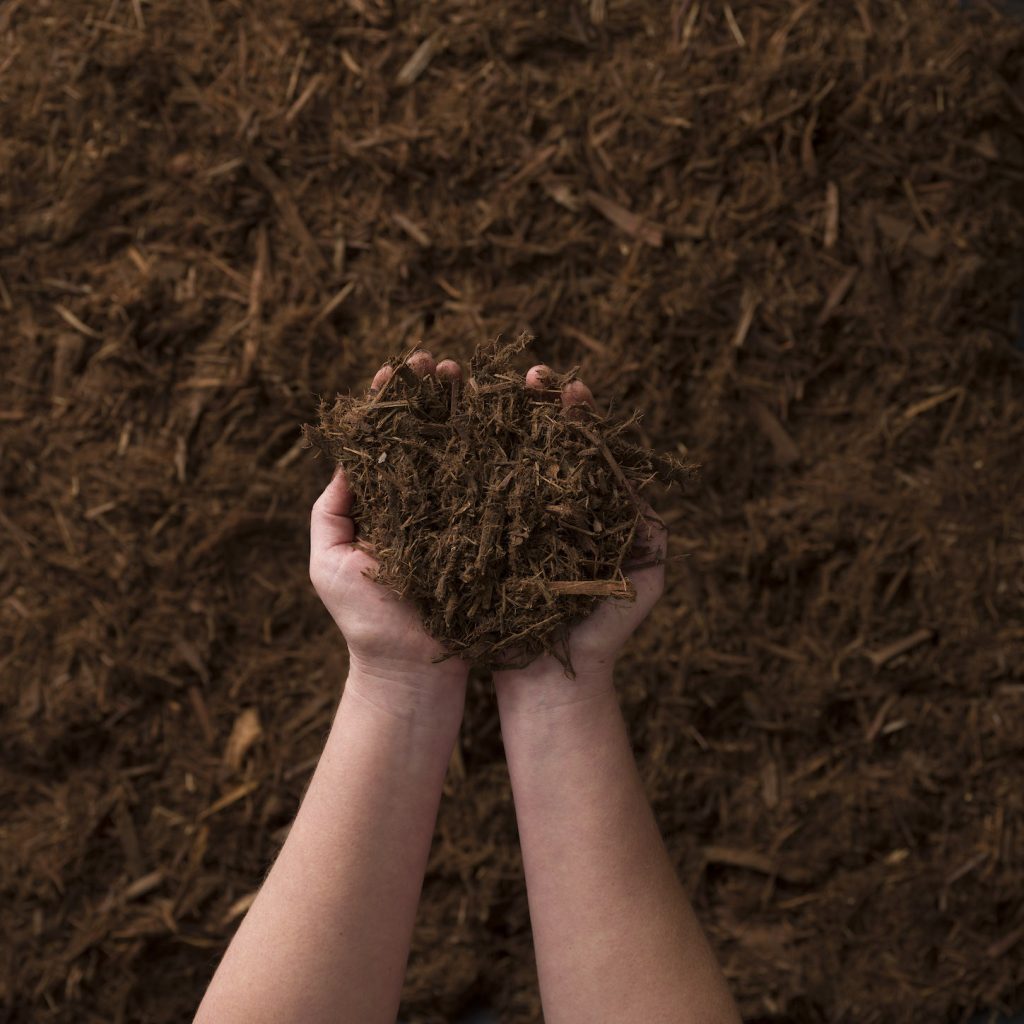
AS 4419 is the Australian Standard for soils for landscaping and garden use. Passing it is a useful baseline, not a guarantee that a soil will grow healthy plants. That gap is the idea behind “soils ain’t soils”, the argument our founder, Terry O’Shea, has made for years: what goes into a soil, and how well its compost is made, matter more than a tick on a standard.
This guide sets out Terry’s case in his own words, describes our garden soils, and helps you choose and order the right mix.
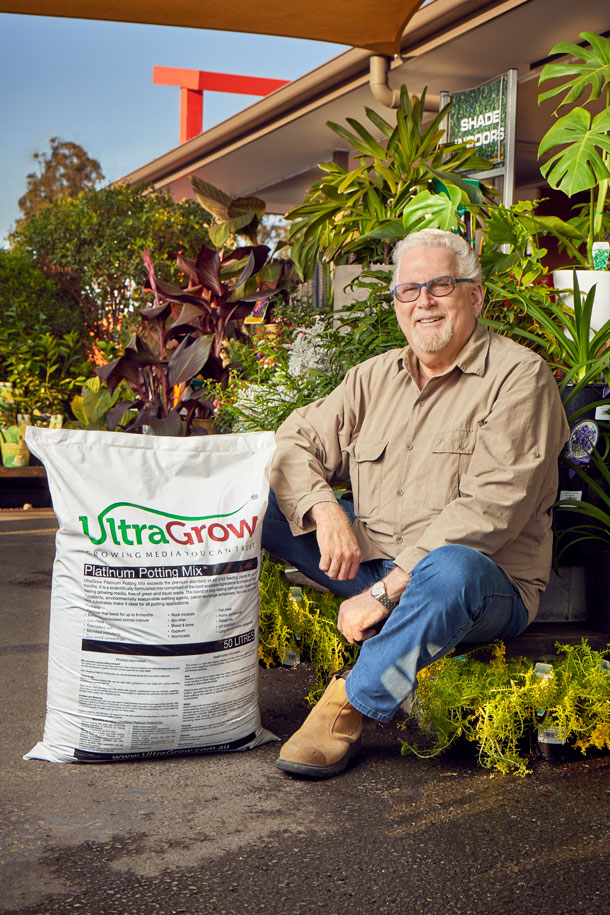
Based on articles by Terry O’Shea, updated with current product information from our team.
Soils ain’t soils: Terry O’Shea on what is in the bag
Terry’s point is that a bag or truckload of soil can look right and still be a poor growing medium. His concern is the compost. In a manufactured soil, he says, the compost makes up most of the mix, so it decides how good the soil is:
Quite simply, if the compost is ‘wrong’ then so will be the soil.
— Terry O’Shea, founder, Centenary Landscaping Supplies
He is not against recycling. Terry describes green organics as “a great resource for composting if handled correctly”, and says some manufacturers use clean streams of organic material to make reasonable soil mixes. His objection is to the way many soils came to market. For decades, he explains, retailers and distributors had to source soils, composts and potting mixes from the waste-recycling industry, which is driven by volume at low cost:
The waste industry is not a gardening industry.
— Terry O’Shea, founder, Centenary Landscaping Supplies
His question is one of quality, and it is the one to put to any soil you buy:
Why spend all this money on sustainable compost recycling, and get it wrong?
— Terry O’Shea, founder, Centenary Landscaping Supplies
Terry’s answer was to make UltraGrow soils by controlling every ingredient, the production process and the analysis.
What AS 4419 tells you about a soil
AS 4419 (often written AS4419) is the Australian Standard for soils for landscaping and garden use, and the current edition is AS 4419:2018. Terry rates it as a sound starting point, with limits:
Don’t get me wrong, the AS4419 standard is a good basic assessment required for manufactured landscape soils. Though criticised by many in the industry, as a basic standard it is not all that easy to pass and simply passing it does not guarantee a product suitable for supporting good plant growth.
— Terry O’Shea, founder, Centenary Landscaping Supplies
In Terry’s view the compost in a soil should be tested too, to AS 4454, the Australian Standard for composts, soil conditioners and mulches. A pass for the finished blend tells you it met the requirements on the day it was tested. It does not, by itself, tell you how the compost in it was made. His test for any soil is simple: it should support healthy plant growth.
Testing costs money, so a certificate is only as useful as it is recent. When you compare soils, ask:
- Which standard or specification was it tested against, and what are the report date and the laboratory?
- What is in it? A list of components and amendments tells you more than “garden mix”.
- Is the compost fully composted, and does it meet AS 4454?
- Does the certificate list any parameters outside the specification?
- Is the soil right for your plants and your site?
Potting mixes have a different standard, AS 3743, so check which one applies before you compare a potting mix with a garden soil. For soil in planters built over a slab, see our podium soils guide.
Our garden soils
Here is how the product pages describe four of our garden soils. Ask us for the current test report for any soil you are considering.

Supreme Garden Soil is described on its product page as a composted clean-stream, waste-based, mid-priced general garden mix. The page lists base soil (for mixing) and general gardening as its uses, and recommends adding a quality fertiliser such as Revitaliser or Ultracote Red Jacket, or a nutrient-rich compost such as UltraGrow Activator Soil Conditioner. 1.1 tonnes is 1 cubic metre.

UltraGrow Platinum Garden Soil is described on its product page as a blend free from liquid and green waste, based on composted bark and AS 4454 certified Enviro Humus-Compost. The page lists general gardening, topsoil, under turf and vegetable gardens, and says it suits all plant types, including veggie and herb planters. 1 tonne is 1 cubic metre.

UltraGrow Ultima Garden Soil is described on its product page as the mid-range UltraGrow soil, free of liquid and green waste, blending Enviro Compost (AS 4454) with natural topsoil and enhanced with fertilisers. The page lists general gardening, topsoil, under turf and vegetable gardens, including digging into tired garden beds. 1.1 tonnes is 1 cubic metre.
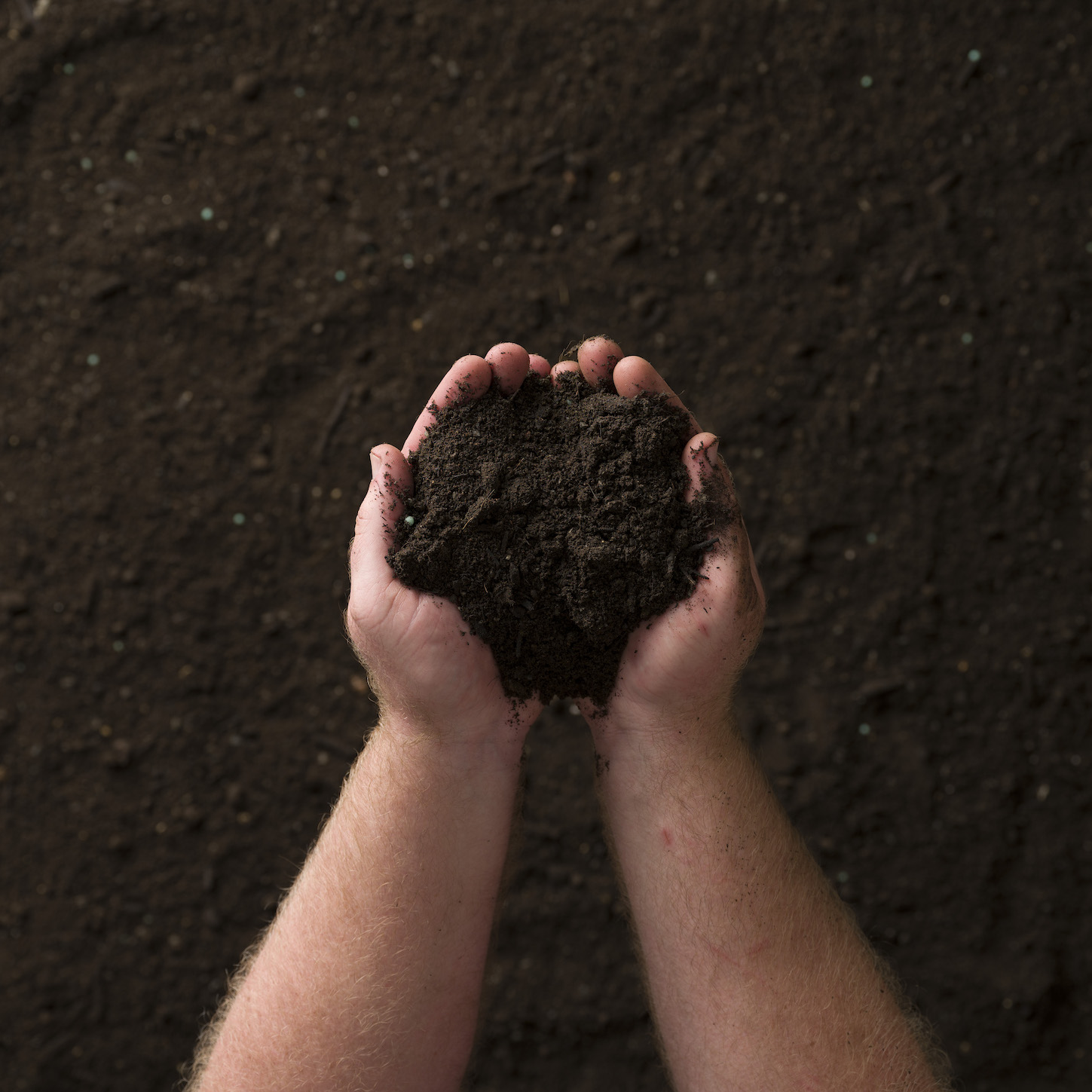
UltraGrow Black Label Garden Soil is described on its product page as a specialist blend, free from industrial liquid and un-composted green waste but now incorporating some fully composted green organics, with controlled-release fertilisers. The page says it contains over 70% actual soil, and lists the same uses as Platinum and Ultima. 1 tonne is 1 cubic metre, and it also comes in a 25 L bag and a bulka bag.
What makes a good topsoil
Topsoil is the layer plants root into. When you buy it, it is normally a blend of natural soil, sand and composted organic matter. Whether you are planting a garden bed, a lawn, a veggie patch or a large planter box, plants need sunlight, water and nutrients, and the soil has three physical jobs to do first.

Stability and substance
The first job is to anchor the plant. A mix that is too light, without enough real soil or mineral content, can let a large shrub or tree blow over in strong wind, and Brisbane’s summer storms will test that.
Open and free draining
A heavy soil anchors well, but it also needs to be open enough to drain freely so it does not waterlog. The ideal is a blend of natural soil (plain “dirt”), sand and composted organic matter. Roots take in oxygen as well as water and nutrients, and in waterlogged soil they cannot, so the plant can effectively drown.
Water retention
Drainage can go too far. If the mix is so loose and open that water passes straight through, plants can dry out and die. A good topsoil balances drainage with water retention, so roots get the water and air they need. If you are dealing with heavy clay, our clay soil guide is a good place to start, and different types of soil explains sand, silt and clay.
Nutrients, pH and organic matter
Nutrients
Once a plant is upright, watered and has air around its roots, it needs food. The three main nutrients are nitrogen (N), phosphorus (P) and potassium (K), plus a range of micronutrients and trace elements. Some blends carry richer compost than others, and several include controlled-release fertilisers, as their product pages describe. Those nutrients do not last forever, so plan on an ongoing feeding routine. Our guide to fertilisers covers how.
Phosphorus needs care with some Australian natives. If you are planting phosphorus-sensitive natives, ask us for a low-phosphorus mix, such as Rocky Point Native Mix, a 30 L bag its page describes as a low-phosphorus blend formulated for Australian native plants.
pH
Soil pH, how acidic or alkaline the soil is, controls how soluble each nutrient is and so how much your plants can take up. For most landscaping plants, a pH from slightly acidic (about 6) through neutral (7) to slightly alkaline (about 7.5) gives the best nutrient availability. Our soil pH fact sheet goes into more detail.
Other things count too, including sunlight, soil depth and the quality of the subsoil underneath.
Why soils contain organic matter
You might wonder why we do not just sell straight natural soil. Without organic matter the particles pack tightly together, so water struggles to drain and air cannot reach the roots. Blending in organic matter opens the soil up, gives water and air room to move, supplies food for plants and soil life, and acts as a small water store in dry spells. It is not a filler.
Natural soil still has its place, but it works best blended with composted organic material.
Fully composted ingredients
The organic material in a soil blend needs to be fully composted, which can take six to eight weeks or more. Fresh, uncomposted material causes nitrogen drawdown: as it breaks down, microbes pull nitrogen out of the soil and plants go short. The time proper composting takes adds to the cost of a quality soil, but it is essential for good plant growth. It is also why Terry insists on testing the compost itself. Our compost guide explains maturity in more detail.
It is what is below the surface that really counts
Terry wrote that the growing medium is the most important part of gardening, and the most overlooked:
… the growing media (soil or potting mix) is the most important aspect of gardening and indeed agriculture. It’s also the most neglected because it’s only ‘dirt’ so who cares? Just water and throw on a handful of NKP chemical fertiliser. What can possibly go wrong? Plenty, if you really want healthy plants which is the whole reason for the exercise.
— Terry O’Shea, founder, Centenary Landscaping Supplies
The health of the plant depends on the health of the ‘soil’. This is true of both gardens and farms alike.
— Terry O’Shea, founder, Centenary Landscaping Supplies
He sees a swing back to organics, by which he means composted organics derived from plant and animal matter. Healthy soil is alive: bacteria, fungi, earthworms and insects break down organic matter, help bind soil particles into crumbs and release nutrients for roots. As Terry says in his piece on compost, “Soils are alive!” Compost feeds that life, which is why the quality of the compost in a soil matters so much.
Fertiliser tops up nutrients, but it does not fix compaction, poor drainage or a lack of organic matter. Grow the soil first and the plants second.
The subsoil counts too
Fresh topsoil is only as good as the ground under it. The depth of your soil and the condition of the subsoil both affect how a new garden or lawn establishes. On heavier clay, a hard, compacted layer beneath new topsoil can hold water like a bowl, so loosen the surface of the subsoil with a fork before you spread soil over it.
Buying the right garden soil mix
Garden soils are not all made for the same purpose, so start with the job. Soil is often the last item on the shopping list, yet it decides how a bed or lawn performs for years. Work through this table, then match it to a soil. The soils named are described on their product pages.
| Job | Think about | Soils to consider |
|---|---|---|
| New garden bed or veggie patch | Which plants: tropical, natives, roses, flowering plants or acid lovers? | Platinum, Ultima and Black Label list vegetable gardens among their uses. For a lower-cost general mix, see Supreme, and plan to add a fertiliser. |
| Existing bed that has tired | What is the soil like now: sandy, depleted or compacted? | Ultima and Black Label pages mention digging into tired garden beds. UltraGrow Activator Soil Conditioner or Enviro Compost can freshen what is there. |
| Native garden | Are your plants sensitive to phosphorus? | Rocky Point Native Mix, described as a low-phosphorus blend for Australian natives. |
| Under new turf | Is your base clay or sand, and does drainage need to improve? | Turf Blend Natural Soil (its page says to spread it 100 mm deep before laying turf and to add a suitable fertiliser) or Lawn Pro-MAXX Foundation Soil. Browse all under-turf soils. |
| Over existing turf | Are you giving the lawn a boost or correcting levels? | UltraGrow Special Blend Top Dressing Soil or Fairway Pro-MAXX Top Dress Sand. Our top dressing guide compares sand and soil. |
| General fill and bulk backfill | Will anything be growing in it? | Trade Soil Mix, a low-cost mix of partially composted green waste and soils. Its page says it is not recommended for veggie gardens, that slumpage is expected and that it must be fertilised regularly. |
| Pots and containers | Is the soil going in a container rather than the ground? | A potting mix, not a garden soil. See our potting mixes. |
| Podium or rooftop planters | How much weight, how much depth, and how will it drain? | A podium soil made to a planter specification. See our podium soils guide. |
If you are unsure, tell us the site, the plants and what the soil is like now, and ask for the certificate of any soil you are considering. Compare the full range in our garden soils category.
How much soil do you need?
Multiply the area (m²) by the depth (m) to get cubic metres, then convert to tonnes using the figure on the product page. For example, 10 m² spread 100 mm (0.1 m) deep needs 1 cubic metre, which is 1 tonne of Platinum or Black Label, or 1.1 tonnes of Supreme or Ultima.
The landscaping calculator does the sums for you. Order a little extra, because soil settles. Garden soils also come in bulka bags: see the soil bulka bags. Check delivery information, and use the suburb delivery cost lookup to see what delivery to your suburb will cost.
Next steps
Browse the garden soils and the UltraGrow growing media, then contact us for the certificate of the soil you choose. Landscapers and contractors can open a 30-day trade account.